
What Is Polyaluminum Chloride Water Treatment?
Polyaluminum Chloride Water Treatment is a widely used process for reducing turbidity, suspended solids, and certain organic impurities in water. Polyaluminum chloride, often called PAC, works by neutralizing particle charges and forming larger flocs. These flocs can settle or become easier to filter. The result may be clearer water and more stable treatment performance. However, PAC is not a magic powder. Its effectiveness depends on water chemistry, dosage, mixing, temperature, and treatment goals.
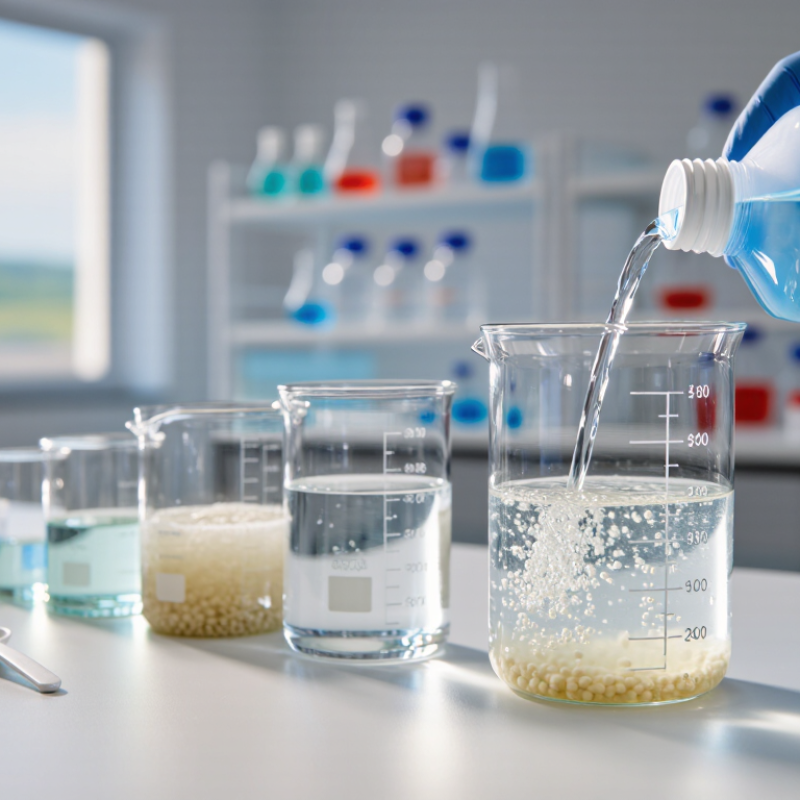
In a properly managed plant, operators usually begin with laboratory jar tests. Small beakers reveal how PAC reacts with raw water before full-scale dosing begins. A technician may compare floc size, settling speed, pH, and residual aluminum. These simple observations can prevent costly dosing mistakes. Professional treatment also requires calibrated pumps, safe chemical storage, and routine process records. International guidance and local drinking-water regulations should guide final decisions. Product labels alone are not enough.
The best PAC program remains site-specific. Water from a river may change after heavy rain, while groundwater can present different mineral conditions. Operators must monitor turbidity, pH, alkalinity, and filtration results throughout the process. Sometimes, a lower dose performs better. Sometimes, more chemical creates weaker flocs. This is where practical judgment matters. Yet, the chemistry is not perfectly predictable. Testing should continue, and results should be questioned when conditions change. This article examines how Polyaluminum Chloride Water Treatment works, where it is applied, and what users should evaluate before selecting or operating a PAC-based system.
Polyaluminum Chloride: Definition and Chemical Composition
Polyaluminum chloride (PAC) is a prehydrolyzed aluminum salt used to destabilize suspended particles in water. Its chemistry is more complex than the name suggests. PAC is commonly represented by the formula Al2(OH)nCl6−n, where n usually ranges from 1 to 5. Commercial solutions also contain polymeric aluminum species, chloride ions, water, and small amounts of acidity. Basicity describes the hydroxyl content relative to aluminum. Higher basicity may reduce acid demand, but performance still depends on raw-water chemistry.
That distinction matters. PAC is not one perfectly uniform compound. Its aluminum species can change with pH, dilution, storage, and alkalinity. The World Health Organization’s Guidelines for Drinking-water Quality set an aluminum guideline value of 0.2 mg/L (WHO, 2022). The U.S. Environmental Protection Agency lists aluminum at 0.05–0.2 mg/L under its Secondary Drinking Water Regulations. These figures concern finished water, not the PAC dose. Poor mixing or excessive dosing may increase residual aluminum and filter loading.
Tips: Run jar tests using actual raw water and seasonal temperatures. Record pH, alkalinity, turbidity, and residual aluminum. Do not trust dosage alone. A practical weakness is often overlooked: laboratory results may not match full-scale conditions. Mixing energy, sludge removal, and filter timing can change the outcome. PAC works through chemistry, but operators still need experience and careful measurement.
How Polyaluminum Chloride Works in Water Treatment
Polyaluminum chloride, or PAC, works mainly through hydrolysis. When added to raw water, it forms positively charged aluminum species. These species neutralize negatively charged clay, organic matter, and microorganisms. The particles then collide and join into visible flocs. Gentle mixing grows the flocs; settling and filtration remove them.
The dose is not universal. A practical starting range is often 5–50 mg/L, but water chemistry can change it sharply. pH, alkalinity, temperature, and turbidity all affect PAC performance. Jar testing remains essential. It shows whether flocs become dense or remain fragile. In optimized trials, professional studies commonly report turbidity removal above 90%, yet that result should not be treated as guaranteed. Real water is less cooperative.
WHO’s Guidelines for Drinking-water Quality, including its 2022 addendum, identifies aluminum control as an operational challenge rather than a simple health-limit calculation. It notes practical treated-water targets near 0.1 mg/L for large plants and 0.2 mg/L for small plants. UN-Water’s 2024 SDG 6 report states that 2.2 billion people lacked safely managed drinking water in 2022, adding pressure to improve reliable treatment. PAC can reduce chemical demand in some systems, but not always. Operators may overlook residual aluminum, sludge volume, or seasonal changes. That is where experience matters.
What Is Polyaluminum Chloride Water Treatment?
Polyaluminum chloride (PAC) is a pre-hydrolyzed aluminum coagulant used to destabilize suspended particles, colloids, and organic matter in water. The particles form larger flocs that can be removed through sedimentation and filtration.
The chart shows representative PAC dosage levels commonly used for different raw-water turbidity conditions. Actual dosage depends on alkalinity, pH, temperature, organic matter, and jar-test results; higher turbidity generally requires a higher coagulant dose.
Steps in the Polyaluminum Chloride Treatment Process
What Is Polyaluminum Chloride Water Treatment?
Steps in the Polyaluminum Chloride Treatment Process
Polyaluminum chloride (PAC) is a coagulant used to remove suspended particles from raw water. It works by neutralizing particle charges and forming heavier flocs. Operators first test turbidity, pH, alkalinity, and temperature. A jar test then identifies a practical PAC dose. This small test matters because raw water changes after storms.
PAC is added through a calibrated dosing system and mixed rapidly. Rapid mixing should spread the chemical evenly within seconds. The water then enters a flocculation basin with slower, gentle movement. Small particles collide and grow into visible flocs. Excessive mixing can break them apart. After flocculation, sedimentation allows the flocs to settle. Clarified water moves forward, while collected sludge requires controlled handling. Filtration may follow when fine particles remain. Operators should verify turbidity and residual aluminum before final conditioning.
Tips: Keep written jar-test records for major source-water changes. Adjust dosage gradually, not by guesswork. Check pumps, mixers, and sampling points during every shift. A clear beaker does not prove complete treatment. Some flocs look good but settle poorly. Review results with laboratory data and field observations. Temperature can quietly change settling performance, so winter settings may need revision. PAC treatment is practical, but poor mixing or incorrect pH can reduce removal efficiency.
Common Water Treatment Applications of Polyaluminum Chloride
What Is Polyaluminum Chloride Water Treatment?
Polyaluminum chloride, or PAC, is a pre-hydrolyzed coagulant used to clarify water. It destabilizes fine particles and forms larger flocs for easier removal. These flocs can capture clay, organic matter, color, and some microorganisms. PAC is common in drinking water plants, wastewater facilities, and industrial process systems.
Common Water Treatment Applications of Polyaluminum Chloride
Municipal plants often use PAC before sedimentation and filtration. This helps reduce turbidity and improves filter performance. The WHO and UNICEF Joint Monitoring Programme reported that 2.2 billion people lacked safely managed drinking water in 2022. That gap increases pressure on treatment systems, especially where raw water quality changes quickly. PAC also supports sewage treatment by removing suspended solids and phosphorus. In factories, operators may apply it to textile, paper, mining, and food-processing wastewater. It can improve sludge settling, but poor dosing may create excessive sludge. That is an operational weakness worth acknowledging.
Tips: Start with jar testing, not a fixed dosage. Test turbidity, pH, alkalinity, and settling time. The correct dose may change after heavy rain. Always review residual aluminum and sludge quality. The American Water Works Association recommends process control through routine sampling and documented adjustment, rather than relying only on supplier guidance. PAC is useful, but it is not a complete treatment solution. Filtration, disinfection, and responsible sludge management still matter.
What Is Polyaluminum Chloride Water Treatment? - Common Water Treatment Applications of Polyaluminum Chloride
| Application Area | Main Water-Quality Targets | How PAC Works | Typical Treatment Stage | Key Operating Considerations |
|---|---|---|---|---|
| Municipal Drinking Water | Turbidity, suspended solids, natural organic matter, and color | Neutralizes particle charges and forms aluminum hydroxide flocs that capture impurities | Coagulation, flocculation, and sedimentation before filtration | Dose and pH should be established through jar testing; mixing intensity affects floc formation |
| Industrial Process Water | Suspended particles, colloids, oil-associated solids, and process color | Destabilizes fine particles and promotes aggregation into separable flocs | Primary clarification or pretreatment before downstream processes | Influent chemistry can vary considerably; alkalinity and competing chemicals may change performance |
| Wastewater Treatment | Total suspended solids, colloidal matter, phosphorus, and wastewater color | Provides coagulation and chemical precipitation, particularly for phosphate removal | Chemical pretreatment, tertiary treatment, or polishing | Chemical addition increases sludge production; final phosphorus limits depend on local requirements |
| Paper and Pulp Manufacturing | Fine fibers, fillers, pitch-related particles, and white-water turbidity | Improves retention of suspended materials and supports clarification of process water | Stock preparation, white-water treatment, or process-water clarification | The treatment program must be balanced with retention aids, drainage requirements, and paper quality |
| Textile and Dyeing Wastewater | Color, suspended solids, colloids, and selected organic compounds | Adsorbs and enmeshes some color bodies and suspended contaminants within metal hydroxide flocs | Physicochemical pretreatment before biological or membrane treatment | Performance depends on dye chemistry, wastewater pH, and the presence of salts or surfactants |
| Food and Beverage Wastewater | Suspended solids, fats, oils, grease, and particulate organic matter | Aggregates particles and assists separation of solids and emulsified materials | Primary clarification or dissolved-air flotation pretreatment | Food-grade process requirements, sludge handling, and downstream biological loading must be considered |
| Swimming Pool and Recreational Water | Fine suspended particles and water haze | Combines very small particles into larger flocs that can be removed by filtration or settling | Intermittent clarification or filter-aid treatment | Use must follow applicable pool-water regulations; PAC is not a disinfectant and does not replace sanitization |
| Sludge Conditioning | Poor settling, fine solids, and difficult dewatering characteristics | Improves particle aggregation and can enhance separation of water from solids | Before thickening, clarification, or mechanical dewatering | The optimum dose depends on sludge type, shear conditions, solids concentration, and dewatering equipment |
Benefits, Dosage Factors, and Safety Considerations
What Is Polyaluminum Chloride Water Treatment?
Polyaluminum chloride, or PAC, is a coagulant used to remove suspended particles from water.
It neutralizes particle charges and helps form larger flocs. These flocs settle faster or become easier to filter. In practical treatment work, PAC can reduce turbidity, color, and some organic matter. Cleaner water follows.
Dose selection depends on raw-water turbidity, pH, alkalinity, temperature, and organic content. A jar test should guide each adjustment, rather than relying on a fixed number. Operators should test several doses and mixing speeds. The best result may use less chemical, but not always. Records should include weather, source-water changes, and final turbidity. Overdosing can leave residual aluminum, increase sludge, or destabilize flocs. Underdosing may produce cloudy water and weak settling. PAC performance also varies between formulations, so product specifications matter.
Safety begins with the safety data sheet and site procedures. PAC can irritate skin, eyes, and airways, especially as a concentrated liquid or powder. Wear suitable gloves, eye protection, protective clothing, and respiratory protection when required. Store it in a compatible, labeled container away from incompatible chemicals. Never guess when transferring or diluting the product. Use clean equipment, controlled dosing, and good ventilation. Drinking-water systems should monitor treated water against applicable quality requirements, including residual aluminum where relevant. Water chemistry changes quickly. That uncertainty deserves attention. A careful operator checks the process, questions unusual results, and adjusts gradually.
