What Is Dye Application and How Does It Work?
Dye application is the controlled process of transferring color into or onto a material. It appears simple, yet every shade depends on careful decisions. Fiber type matters. So does temperature.
In textile production, technicians prepare the fabric, select a compatible dye, and measure the liquor ratio. The material then enters a dye bath, printing system, or coating line. Heat, moisture, agitation, and time help the color move into the fiber. Fixing agents may then improve wash fastness and reduce color loss. The final fabric is rinsed, dried, and inspected under consistent lighting.
Textile coloration expert Dr. A. D. Broadbent described dyeing as “the application of color to a textile material.” His statement is brief, but it reflects an important principle. Dye application is not only about appearance. It involves chemistry, material behavior, process control, and responsible wastewater management.
Small changes can create visible defects. A slightly uneven bath may produce streaks. An incorrect pH can weaken fixation. Even experienced operators sometimes need to adjust the recipe after testing. That is normal.
The most reliable approach uses laboratory trials, measured records, and repeatable equipment settings. Color matching should be checked against physical samples, not screens alone. Lighting can deceive the eye.
This guide explains how dye application works, why different materials require different methods, and which variables influence the final result. It also considers practical limitations, because perfect uniformity is often an aim rather than a guarantee.
Definition and Purpose of Dye Application
What Is Dye Application and How Does It Work?
Dye application is the controlled placement of color onto fibers, yarns, fabrics, or finished products. Its purpose is not merely visual appeal. It creates a stable shade, supports product identification, and improves resistance to washing, light, rubbing, and perspiration. The dye must bond with the material. Otherwise, color may bleed or fade quickly.
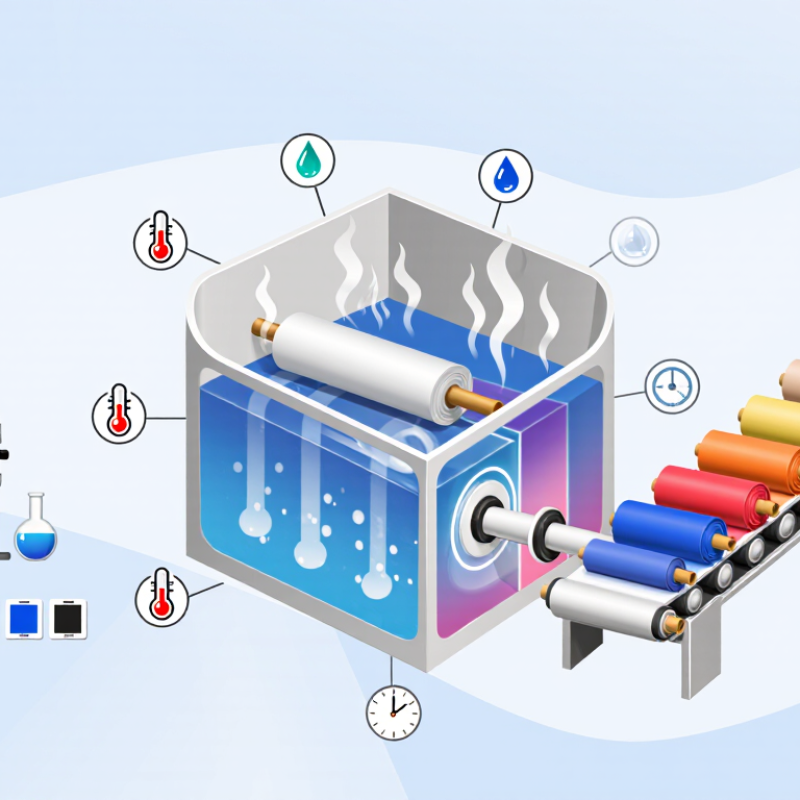
The process begins with preparation. Technicians clean the substrate, select a compatible dye, and control the dye bath’s temperature, pH, time, and liquor ratio. Heat, salt, or alkali may help the dye enter and fix within the fiber. The method changes with the material. Cotton, wool, polyester, and blended fabrics rarely behave alike. An operator usually checks a small sample before full production. That practical step prevents expensive shade corrections.
Heat, salt, or alkali may help the dye enter and fix within the fiber.
Scale makes precision increasingly important. Textile Exchange’s 2024 Materials Market Report estimates global fiber production reached 124 million metric tonnes in 2023. The United Nations Environment Programme estimates textile production consumes about 215 trillion litres of water annually. These figures make efficient dye application more than a quality issue. It also affects resource use and wastewater control.
In practice, the ideal process can be messy. A shade may match under factory lighting but fail under daylight. A formula can look efficient, yet require repeated rinsing. Dye application still depends on careful testing, honest records, and technicians willing to question familiar settings.
Types of Dyes and the Materials They Color
Dye application is the controlled attachment of color to a material. The chemistry must match the fiber. Reactive dyes form covalent bonds with cotton, linen, and viscose. They deliver bright shades and strong wash resistance. Direct dyes also color cellulose fibers, but their durability may be lower without careful finishing. The substrate matters.
Disperse dyes are designed for polyester and other hydrophobic fibers. Heat opens the fiber structure, allowing tiny dye particles to migrate inside. Acid dyes bond effectively with wool, silk, and nylon through ionic attraction. Vat dyes require reduction, application, and oxidation. This process suits cotton and is widely associated with deep blue workwear shades. Pigments behave differently. They sit on the surface and need a binder, so they can color fibers, blends, and finished fabrics.
According to Textile Exchange’s Materials Market Report 2024, global fiber production reached about 124 million tonnes in 2023. The report projects approximately 160 million tonnes by 2030. That growth increases the need for accurate fiber-specific dye selection.
In production, temperature, pH, liquor ratio, and time control shade development. Small errors matter. A laboratory match may look correct but fail rubbing or washing tests. I have found that blended fabrics remain especially difficult, because each fiber can absorb color at a different rate. Reliable dyeing therefore depends on testing the actual fabric, not only trusting its fiber label.
How Dye Molecules Attach to a Surface
What Is Dye Application and How Does It Work?
Dye application begins when dissolved or dispersed colorants meet a prepared surface. The attachment process depends on chemistry, temperature, moisture, and contact time. A clean surface usually accepts dye more evenly. Dust, oil, or uneven moisture can block active sites. The result may look simple, but several forces act at once.
Some dye molecules attach through ionic attraction. This occurs when charged dye groups meet oppositely charged sites on a fiber. Other molecules form covalent bonds with the surface, creating a stronger and more permanent connection. Hydrogen bonding and weaker van der Waals forces may also help hold color in place. On hydrophobic synthetic materials, certain dyes diffuse into the polymer instead of forming a clear outer layer. Pigments behave differently because they remain solid and need a binder to stay attached.
In a controlled dyeing trial, I would monitor pH, heat, agitation, and rinsing separately. Each variable can change shade depth and resistance to washing. Under a microscope, a well-prepared surface may show color moving into tiny pores or spreading across exposed areas. It is not always uniform. I have found that a longer treatment time does not automatically improve the result; excess dye can remain loosely attached and later bleed. Testing a small sample remains worthwhile, especially when the surface composition is uncertain. Surface preparation deserves more attention than many quick instructions suggest.
Step-by-Step Dye Application Process
What Is Dye Application and How Does It Work?
Step-by-Step Dye Application Process
Dye application changes a material’s color through controlled contact with a coloring solution. The result depends on fiber type, moisture, temperature, and processing time. Before application, inspect the material for stains, oils, or uneven texture. Clean it carefully, then allow it to remain evenly damp. Always test a small hidden area. Color samples can behave differently from the final material.
Prepare the dye according to its technical instructions. Wear suitable gloves and protect nearby surfaces. Add the material slowly, keeping it fully covered by the solution. Move it gently with a clean tool or gloved hand. This reduces streaks and pale patches. Keep the temperature stable. Check the color at regular intervals. Timing matters more than many beginners expect.
The material may look darker while wet. Do not judge the final shade too quickly. Remove it when the color reaches the desired depth, then rinse until the water becomes mostly clear. Wash it separately and dry it under the recommended conditions. I still find uneven edges after rushed applications. That mistake is useful. It shows where movement, temperature, or preparation needs improvement. Record the formula, timing, and material condition for more reliable future results.
| Step | Process Stage | What Happens | Typical Operating Conditions | Main Purpose | Quality-Control Check | Safety Consideration |
|---|---|---|---|---|---|---|
| 1 | Fiber and Dye Selection | The fiber type, fabric construction, target shade, and performance requirements are reviewed before selecting a compatible dye class. | Reactive dyes are commonly used for cotton; acid dyes for wool and nylon; disperse dyes for polyester. | To ensure chemical compatibility, color strength, and acceptable fastness. | Confirm fiber composition, dye compatibility, recipe accuracy, and laboratory color approval. | Review safety data sheets and avoid mixing incompatible chemicals. |
| 2 | Material Preparation | The textile is inspected, weighed, and prepared for uniform wetting. Knits and woven fabrics may be opened, stitched, or loaded to prevent tangling. | The material-to-liquor ratio is selected according to equipment and fabric type; common batch ranges are approximately 1:5 to 1:20. | To promote even circulation and consistent dye penetration. | Check weight, moisture condition, construction defects, and loading uniformity. | Use proper lifting methods and keep moving equipment guarded. |
| 3 | Scouring or Pre-Treatment | Natural oils, waxes, dirt, sizing agents, and processing residues are removed. Cotton may also undergo bleaching when a clean or bright base is required. | Alkaline scouring is commonly carried out in warm-to-hot aqueous conditions; exact temperature and time depend on fiber and equipment. | To improve absorbency and prevent uneven dye uptake. | Check absorbency, residual alkalinity, whiteness where applicable, and fabric weight loss. | Wear chemical-resistant gloves, eye protection, and protective clothing when handling alkalis or oxidizers. |
| 4 | Bath Preparation | Water, dye, auxiliaries, and pH-control chemicals are measured and added according to a controlled recipe. | Dye concentration is often expressed as a percentage of the dry fabric weight. Salt, alkali, acid, leveling agents, or dispersing agents may be used depending on the dye class. | To create a stable dyeing environment and control the rate of dye transfer. | Verify weighing accuracy, solution clarity or dispersion, pH, and bath temperature. | Add concentrated chemicals slowly and follow prescribed dilution procedures. |
| 5 | Dye Introduction | The prepared dye is introduced gradually while the textile and liquor circulate. Controlled addition helps prevent sudden color concentration and streaking. | Addition time is adjusted to dye class, shade depth, machine type, and fabric sensitivity; gradual dosing is generally preferred. | To distribute dye evenly before fixation or high-temperature exhaustion occurs. | Observe liquor circulation, fabric movement, dosing rate, and early shade uniformity. | Prevent splashing and use local ventilation where powders or vapors may be present. |
| 6 | Dye Exhaustion or Transfer | Dye molecules move from the bath onto and into the fibers. Heat, pH, electrolyte concentration, and agitation influence the transfer rate. | Common dyeing temperatures range from about 40°C to 130°C, depending on the fiber and dye system. | To achieve the intended depth and penetration without creating shade variation. | Monitor temperature profile, pH, circulation, bath color, and fabric movement. | Use thermal protection and follow pressure-vessel procedures for high-temperature equipment. |
| 7 | Fixation | The dye is bonded to, trapped in, or otherwise stabilized within the fiber. For cotton reactive dyeing, alkali promotes chemical fixation; other dye classes use different mechanisms. | Fixation conditions vary widely. Reactive dyeing commonly uses alkaline conditions, while disperse dyeing commonly relies on elevated temperature and pressure. | To improve wash fastness, rubbing fastness, and resistance to color loss. | Check fixation time, pH or temperature, residual bath color, and sample shade. | Control chemical exposure and never open pressurized equipment before full depressurization. |
| 8 | Rinsing and Soaping | Unfixed dye and processing chemicals are removed through rinsing. Cotton reactive dyeings are often soaped or washed at elevated temperature to remove hydrolyzed dye. | Several rinses may be used, with pH and temperature gradually adjusted toward neutral conditions. | To improve color fastness, brightness, handle, and resistance to staining during laundering. | Check rinse-water clarity, final pH, residual color, and fabric cleanliness. | Manage hot water, detergents, and wastewater according to site procedures. |
| 9 | Neutralization and Softening | The fabric pH is adjusted, and selected finishing agents may be added to modify softness, lubrication, moisture management, or hand feel. | The final pH is commonly brought near the mildly acidic-to-neutral range, subject to the product specification. | To make the material suitable for subsequent processing and consumer contact. | Measure fabric pH, verify softener concentration, and assess hand feel and absorbency. | Avoid direct contact with acidic or alkaline neutralizing agents. |
| 10 | Drying and Fabric Setting | Excess water is removed, and the textile is dried. Heat setting may be applied to suitable thermoplastic fibers to stabilize width and dimensional properties. | Drying and setting temperatures depend on fiber type, moisture content, fabric construction, and finishing requirements. | To achieve target moisture, width, appearance, and dimensional stability. | Check residual moisture, width, weight, skew, shrinkage, and surface appearance. | Protect operators from hot surfaces, steam, rotating parts, and airborne lint. |
| 11 | Final Inspection | The dyed material is inspected for shade consistency, defects, physical performance, and compliance with the approved specification. | Inspection is performed under standardized lighting and agreed testing conditions. | To confirm that the finished textile is commercially acceptable and fit for its intended use. | Evaluate shade difference, color fastness, wash fastness, rubbing fastness, pH, width, and defects. | Handle samples safely and record test results for traceability. |
Factors That Affect Color Quality and Durability
What Is Dye Application and How Does It Work?
Factors That Affect Color Quality and Durability
Dye application is the controlled process of bonding color to a material, such as fabric, leather, paper, or selected plastics. In textile work, the result depends on how well the dye enters the fiber. Preparation matters. Oils, dust, and finishing agents can block absorption and create pale patches. I usually wash and wet the material evenly before dyeing. A dry fold can leave a visible streak.
Color quality depends on temperature, pH, dye concentration, water hardness, and application time. These factors interact. A bath that is too hot may damage sensitive fibers, while low heat can produce weak shades. Gentle, regular movement helps prevent cloudy areas. Measuring the dye and water is more reliable than estimating by eye. Small differences matter.
Durability also depends on fiber type and fixing conditions. Some dyes require heat or a chemical fixative to improve bonding. Rinsing should continue until the water becomes nearly clear. Leftover dye can bleed during the next wash. Light exposure, detergent strength, friction, and repeated washing gradually reduce color depth. I have sometimes trusted a strong first impression too quickly. A color may look excellent when wet, then dry noticeably lighter. Testing a small sample, washing it, and checking it under natural light gives more dependable evidence. Still, even careful testing cannot predict every production variation.
What Is Dye Application and How Does It Work?
Dye application transfers colorant molecules into or onto a textile fiber. Heat, pH, time, moisture, fiber chemistry, and washing conditions determine how evenly the dye is absorbed and how well the final color withstands use.
Typical temperature windows used in textile dyeing. Actual settings vary with fiber type, dye formulation, auxiliaries, equipment, and shade depth.
Commonly used on cotton and other cellulosic fibers. Alkaline conditions, often around pH 10.5–11.5, promote covalent bonding.
Used mainly on wool, silk, and nylon. Acidic baths, often around pH 4–6, support ionic attraction and level dyeing.
Designed for polyester and other hydrophobic fibers. High-temperature application, commonly near 120–135°C, improves diffusion into the fiber.
Applied to cellulosic fibers in a reduced, soluble form, then oxidized to develop the final insoluble color.
Color quality improves when temperature, pH, dye concentration, liquor ratio, agitation, and application time are controlled consistently. Durability depends on the strength of dye–fiber bonding, penetration, fixation, rinsing, and resistance to washing, light, rubbing, and perspiration.
Related Posts
-
7 Best Methods in the Process of Dyeing in Textile Industry
-
Why is Dye Application Important in Various Industries?
-

Top Dye Applications for Global Buyers Insight?
-
Top 10 Tips for Understanding the Dyeing and Finishing Process?
-
2026 How to Master the Dyeing Process for Global Sourcing?
-
2026 How to Use Textile Spray for Effective Fabric Finishing?